

Fall is one of the best times to give your lawn a little extra attention. After months of New Mexico heat, intense sun, foot traffic and regular irrigation, your lawn—and the soil beneath it—may be ready for some help.
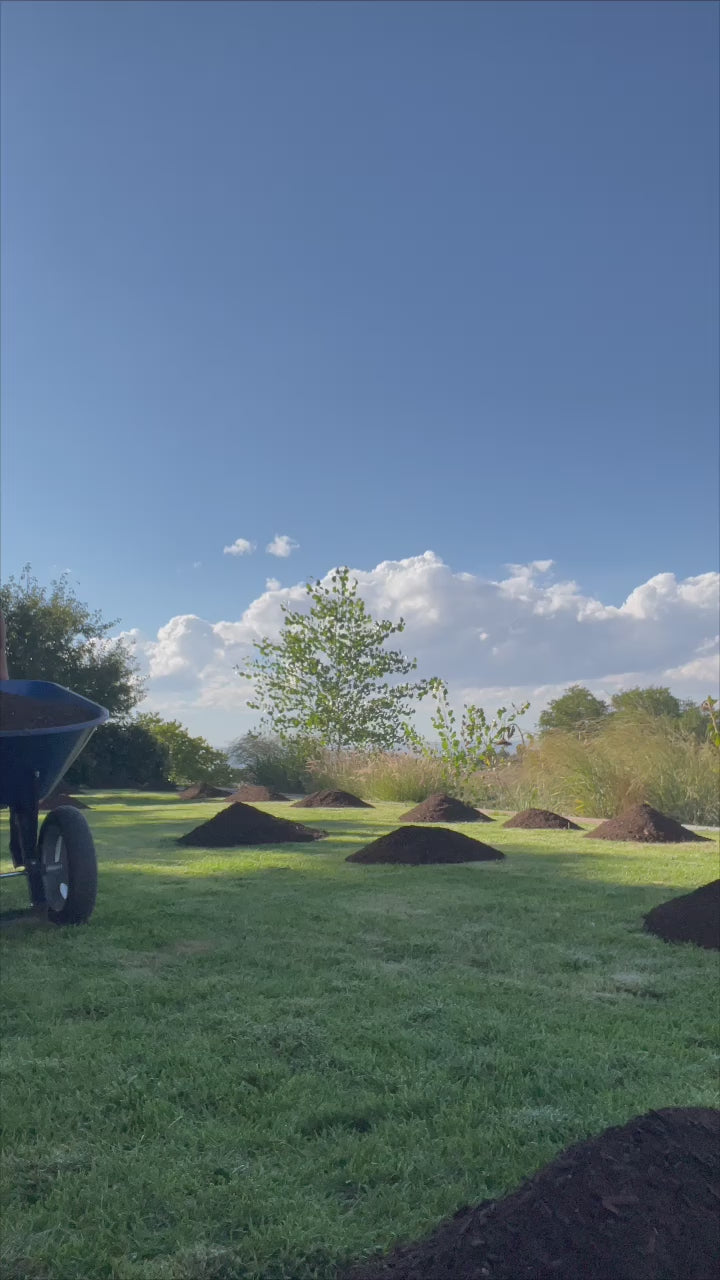
One of the simplest ways to improve a lawn is topdressing, which means spreading a thin layer of material over the surface of an existing lawn.
But what should you use: compost or topsoil?
The answer depends on what you’re trying to accomplish.
First, What’s the Difference Between Compost and Topsoil?
It’s easy to confuse compost and topsoil, but they are not the same thing.
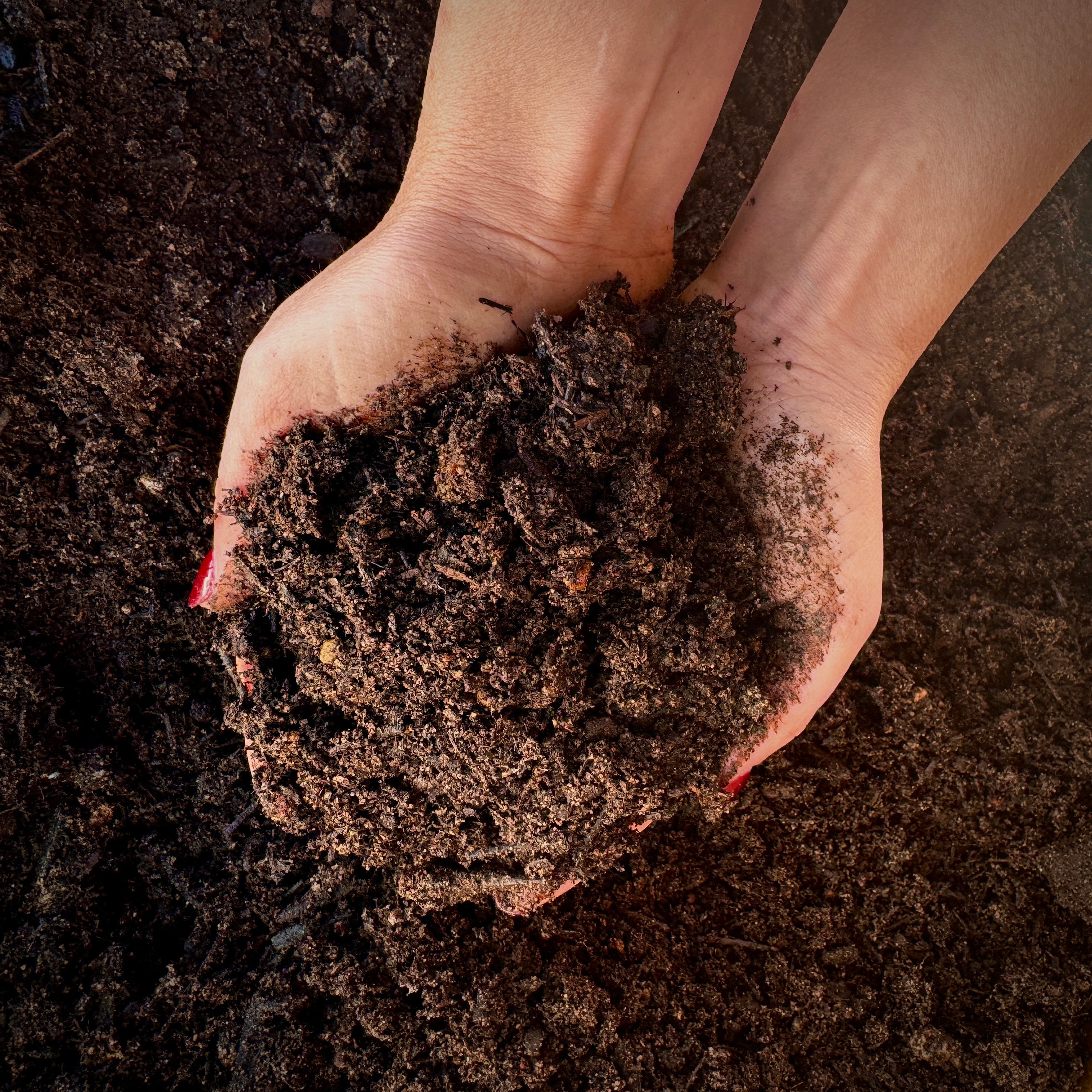
Compost is decomposed organic material. At Soilutions, our compost is made from recycled green waste and food waste that has gone through the composting process. The finished product is rich in organic matter and beneficial biology and is used as a soil amendment—meaning it is added to existing soil to improve it. Compost is not actually soil.
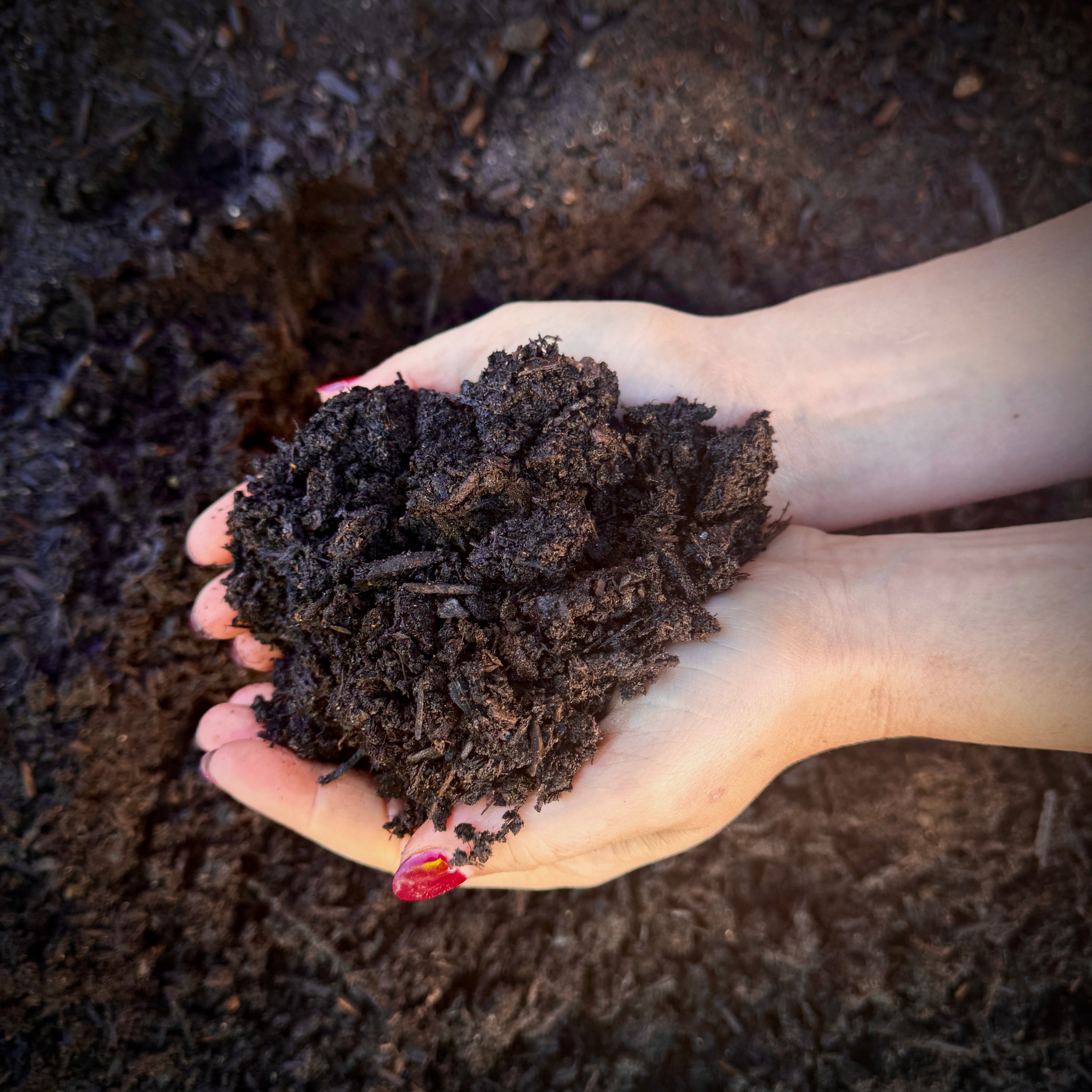
Topsoil contains mineral soil. Soilutions Enriched Topsoil is made with approximately 30% sandy loam and 70% organic matter, creating a soil blend that can be used when you need to actually add soil, build up an area or fill low spots.
A simple way to think about it is:
Compost improves the soil you already have. Topsoil adds soil where you need more of it.
That distinction is especially important when topdressing a lawn. If your lawn is level but the soil needs improvement, compost may be all you need. If you have dips, low spots or areas where soil has been lost, topsoil is usually the better choice.
Use Compost to Improve the Soil You Already Have
Compost adds organic matter and beneficial biology to the soil. Over time, it can help improve soil structure, water infiltration and moisture retention—especially valuable in our dry New Mexico climate. If your lawn is established and the grade is good, but you want to improve the health of the soil beneath it, compost is usually the better choice.
A light layer of compost can work its way down into the root zone through watering, rainfall and normal soil activity. Think of it as feeding the soil so the soil can better support your lawn.

Choose compost when you want to:
-
Add organic matter to your existing soil
-
Improve soil structure
-
Help soil hold moisture more effectively
-
Encourage healthier root growth
-
Add nutrients gradually
-
Improve tired or depleted soil without significantly changing the lawn's grade
For an established lawn, you don't want to bury the grass. Apply approximately ¼ to ½ inch of compost across the surface, making sure the grass blades remain exposed. Rake it lightly so the compost settles between the blades and then water thoroughly.
If your soil is compacted, fall is also a great time to aerate first and topdress afterward. The openings created by aeration allow compost to move deeper into the root zone where it can do even more good.
Use Topsoil When You Need to Add Soil
If your lawn has low spots, uneven areas, exposed roots or places where soil has eroded away, you don't necessarily need more organic matter—you need more soil volume.
That's when a quality topsoil is the better choice.
Topsoil can be used to gradually level uneven areas, fill shallow depressions and provide a better base for reseeding thin or bare spots.

Choose topsoil when you want to:
-
Fill low spots in the lawn
-
Correct minor grading issues
-
Replace soil lost to erosion
-
Cover exposed roots
-
Build up areas where there simply isn't enough soil
-
Prepare bare or thin areas for grass seed
When leveling an existing lawn, work gradually. Adding too much soil at once can smother the grass underneath. Apply a thin layer, rake it into the existing turf and allow the grass to continue growing through it.
What About Reseeding?

Fall is also an excellent time to repair thin areas or overseed many cool-season lawns.
If you're simply overseeding an established lawn and want to improve the soil at the same time, a light compost topdressing can be a great choice.
If you're repairing a bare area, filling a depression or establishing grass where the existing soil level needs to be raised, topsoil is generally the better starting point. Seed can then be applied according to the recommendations for your particular grass variety.
And remember: new grass seed needs consistent moisture. Albuquerque's dry air, wind and sunny fall days can dry the soil surface surprisingly quickly. Newly seeded areas may need several light waterings throughout the day to keep the seedbed consistently moist during germination.
Why Fall?
Fall gives lawns a chance to recover from the stress of a New Mexico summer while temperatures become more moderate. For cool-season grasses, it is also an important period of root growth and recovery before winter.
Improving your soil now can help your lawn head into winter in better condition and give it a stronger foundation when growth picks back up in spring.
At Soilutions, we manufacture our compost and soil products locally using recovered organic materials, including food waste and green waste that might otherwise end up in the landfill. Our finished products are designed with New Mexico soils and growing conditions in mind.
So before you put the lawn to bed for winter, take a look beneath the grass. A little attention to the soil this fall can make a noticeable difference in the lawn you see next spring.